


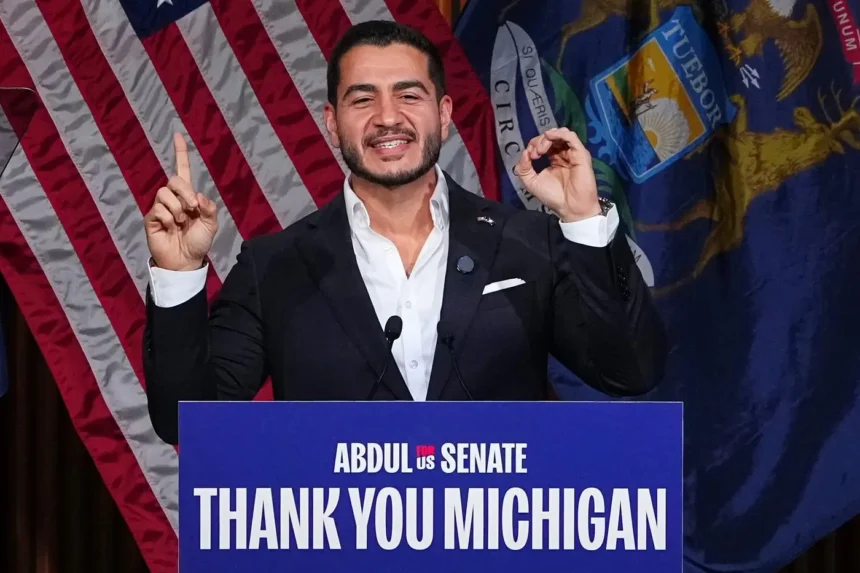
Democrat Abdul El-Sayed has won Michigan’s 2026 U.S. Senate race, defeating Republican Mike Rogers in a closely watched contest. The Associated Press called the race for El-Sayed on November 4, making him the first Muslim American elected to the U.S. Senate.
The victory is a historic moment for Muslim representation in US politics. It also gives Michigan a new senator who campaigned on expanding healthcare access, addressing the cost of living and reducing the influence of corporate money in elections.
Michigan Senate Election Results
El-Sayed defeated former Republican congressman Mike Rogers in the November 3 general election. The Associated Press and other news organizations projected El-Sayed as the winner.
The election-results screenshot available during the count showed El-Sayed ahead with 52.5% of the vote and Rogers with 45.5%, with approximately 98% of estimated votes counted. Those were preliminary figures, not final certified totals. Vote counts can change as election officials complete their reviews.
An AP race call is a projection based on available results. It is separate from the state’s formal certification process. El-Sayed is therefore appropriately described as senator-elect until he takes office.
Who Is Abdul El-Sayed?
Abdul El-Sayed is a Michigan-born physician and former public health official. He is 42 years old and the son of Egyptian immigrants. Before entering national politics, he built a career in medicine, public health and local government.
He studied biology and political science at the University of Michigan, earned a doctorate in public health from the University of Oxford and later received his medical degree from Columbia University in 2014.
His professional background helped shape his political focus on healthcare, public services and the challenges facing working families.
His Public Health and Political Career
El-Sayed became widely known in Michigan when he was appointed director of the Detroit Health Department in 2015. He later served in Wayne County’s health and human services administration.
His first major statewide political campaign came in 2018, when he ran for Michigan governor. He finished behind Gretchen Whitmer in the Democratic primary.
In 2026, he entered the race for the U.S. Senate seat being vacated by Democratic Senator Gary Peters. El-Sayed won a competitive Democratic primary against Representative Haley Stevens before facing Rogers in the general election.
Why His Victory Is Historic
El-Sayed’s election marks a milestone in American political representation. He is set to become the first Muslim American to serve in the U.S. Senate.
Muslim Americans have served in the U.S. House of Representatives, but no Muslim had previously been elected to the Senate. His victory is significant for communities that have often had limited representation at the highest levels of federal government.
His faith and background also became subjects of political debate during the campaign. Republican figures made accusations about his alleged extremist connections, which El-Sayed denied. Reuters reported that those allegations were unsupported by evidence.
The election also showed that voters were considering issues such as healthcare, household costs and political influence alongside candidates’ personal backgrounds.
What Were His Main Campaign Issues?
El-Sayed built his campaign around healthcare access, economic affordability and reducing the role of wealthy donors and corporations in politics.
One of his major proposals was Medicare for All, a single-payer healthcare system intended to provide broad health coverage. He also called for action on medical debt and policies aimed at making everyday expenses more manageable for families.
Another central part of his platform was limiting outside political spending and increasing accountability in elections. He argued that ordinary voters should have more influence than wealthy donors and powerful organizations.
These proposals formed the core of his progressive campaign and helped distinguish him from Rogers.
What Happens Next?
El-Sayed is expected to take the Michigan Senate seat previously held by retiring Senator Gary Peters. His new Senate term is scheduled to begin in January 2027.
Before taking office, the election process must proceed through the relevant state procedures. Once sworn in, he will begin serving Michigan in the U.S. Senate.
His campaign promises will then face the practical challenges of working with other senators, negotiating legislation and building support for his proposals.
A New Chapter in US Political Representation
Abdul El-Sayed’s Michigan Senate victory is both an important election result and a historic moment for Muslim Americans. His background in public health and his campaign’s focus on healthcare and economic issues will shape expectations as he prepares to enter the Senate.
For now, he stands as senator-elect after the Associated Press called the race in his favor. His formal start in the Senate will follow the completion of the election process and his swearing-in.
Sources
- Associated Press (AP): Abdul El-Sayed wins Michigan Senate race
- Reuters: Abdul El-Sayed becomes first Muslim elected to US Senate
- NPR: Abdul El-Sayed defeats Mike Rogers in Michigan Senate race
- Ballotpedia: Abdul El-Sayed biography and election information